Showing posts with label Alexander Mosolov. Show all posts

Thursday, December 1, 2022

Review: Gregor Tassie's 'Three Apostles of Russian Music'


The Three Apostles of Russian Music: The Soviet Avant-Garde, Gregor Tassie, Lexington Books. 

I started this blog because I had discovered that I not only loved Prokofiev and Shostakovich, I also loved their lesser-known, very talented but persecuted colleagues, such as Nikolai Roslavets, Gavriil Popov and Alexander  Mosolov. I was determined to do what I could to help others discover these composers. 

Scottish musicologist Gregor Tassie must feel much the same way. His book, The Three Apostles of Russian Music: The Soviet Avant-Garde, discusses Roslavets, Popov and Mosolov, covering their most important works and providing context about their lives and work, including their 1920s and early 1930s heyday.

Tassie previously authored a biography of Nikolai Myaskovsky and of two prominent Russian musicians, the conductors Yevgeny Mravinsky and Kirill Kondashin. The biography at the back of his new book states teasingly that he's now at work on a biography about "a celebrated Russian musician." He apparently speaks fluent Russian, allowing him to quiz Russian college professors who are experts on the trio he writes about and to dig through primary source archives.

The result is a book that is heavily researched and a wonderful resource for fans of Russian avant-garde classical music of the last century. Fans of Prokofiev and Shostakovich also will learn much by finding out more about the milieu of the two best-known Russian composers.

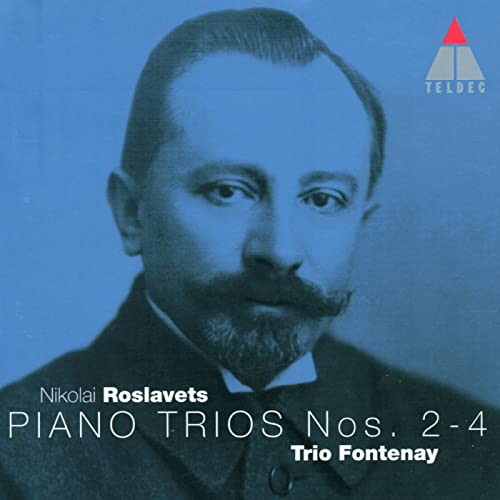
Tassie is careful to tell the reader which of the men's works are particularly good and deserve close attention; his judgment generally seems quite sound to me (i.e., I often found myself agreeing with him.) For example, when I recently listened to a recording by the German group Trio Fontenay of Roslavets' surviving piano trio works, I noticed that I particularly liked the third trio. Tassie refers to it as an "outstanding piece."

Indeed, readers will want to pay careful attention to sentences such as this one, about Roslavets' Chamber Symphony No. 2: "In the context of symphonic works written during the 1930s, Roslavets's symphony justifiably stands with Popov's First (1934), Shostakovich's Fourth (1936), and Myaskovsky's Tenth and Seventeenth (1930)."

Many of the composers Tassie writes about were particularly edgy early in their careers but adopted a more conservative approach in their later years, and Tassie is careful to note that these changes in direction weren't solely because of pressure from the Stalinist regime. Prokofiev, for example, was already moving toward a more approachable style before he returned to live in Russia. And Shostakovich, Tassie notes, showed signs of toning down  his style even before the infamous attack in the pages of Pravda. 

While Tassie obviously admires the composers he writes about, he also points out their failings. Popov is depicted as indolent, slow to finish his work and prone to missing deadlines. Mosolov was very careless about preserving his work. And in fact, it's sad how much music has been lost or is in jeopardy. Many of the works of the three composers have been sitting in archives for years and are only known through the efforts of dedicated Russian musicologists, who are named in Tassie's "Acknowledgements."

 A careful reader will want to keep an eye not just on the text, but on the footnotes. For example, Tassie goes into considerable detail about Popov's film music, which allowed Popov to make a living when the composer got into trouble for "formalism," and at one point Tassie mentions a film director named Faintsimmer. The name meant nothing to me, but a note explains, "Alexander Mihailovich Faintsimmer (1906-1982) enjoyed a long career making his first movie in 1929 and notable for his 1934 film Lieutenant Kije with a score by Prokofiev, the suite from which became world famous."

As a kind of bonus, Tassie's final chapter discusses three more modernist Russian composers: Mikhail Matyushin, Arthur Lourié and Joseph Schillinger. The conclusion also puts Russian modernism in the context of global classical music modernism and touches on Russian composers who can be seen as successors to Tassie's trio. 

The book includes a list of works for each composer and a list of recordings. Fortunately, as the trio continue to get more recordings, the list is already a bit out of date. The Popov Quartet Symphony, which Tassie apparently likes, finally got a recording. 

This is a book aimed at the academic market and is unfortunately therefore rather expensive, so that perhaps some readers may have to resort to asking their local library to acquire it. That would also make the book available for others; good for Cleveland Public Library, where I found my copy, although (full disclosure) on the strength of this blog, the publisher agreed to let me have a review copy. I really wanted one; I am sure I will be referring to Tassie's excellent book many times. 


Friday, November 11, 2022

Exciting new book on Russian avant-garde composers


I read dozens of books every year. Every once in awhile, I will run across a new book title and get the odd sensation that the author has written a book just for me.

While that doesn't happen often, it has just happened to me again. The Three Apostles of Russian Music by Gregor Tassie is not, as you might guess from the title, about Shostakovich, Prokofiev and Myaskovsky. It is in fact about three composers I focus upon at this blog: Nicolai Roslavets, Gavriil Popov and Alexander Mosolov.

I have only had time so far to read the Introduction and the first chapter of the library copy I managed to get my hands upon, but I can already report that the book is the product of immense research and that Tassie really knows his subject (he knows Russian fluently, he's in touch with all of the top Russian scholars of the three composers, he got help from staff at museums and institutes in Moscow and St. Petersburg, etc. etc. 

This is the sort of book in which even the footnotes require careful study. Here is footnote No. 40, which points me to some Myaskovsky works to try: "Myaskovsky's Tenth, Eleventh, Thirteenth symphonies, and Fourth String Quartet did experiment with serialism -- author." 


Friday, November 4, 2022

Larry Sitsky's Russian Futurism book and music recordings


Larry Sitsky is a prominent Australian composer; the guy who does the myaskofiev 2 Twitter account, Melvyn Madigan, tells me Sitsky is well known as a composer in Australia, although perhaps most respected as an academic, writer and pianist. He's also Australia's most commissioned composer, Madigan tells me. 

Sitsky has tried to promote the music I write about  here in two different ways.

His book, Music of the Repressed Russian Avant-Garde, 1900-1929, covers the music I write about in this blog. It is written for musicologists, but I was able to understand parts of it, such as Sitsky's contention that Alexander Mosolov's piano sonatas are just as good as Prokofiev's. It's a pretty expensive book, unfortunately, and I can't afford it. 

Sitsky also has recorded an album, Russian Rarities, which has almost four hours of piano music. The composers featured on the album are Vladimir Deshevov, Arthur Lourie, Alexander Mosolov, Nicolai Obukhov, Leonid Polovinkin, Vladimir Rebikov, Nikolai Roslavets, Anton Rubinstein and Vladimir Scherbakov. 

Sitsky's notes on the album are available online. He writes, "Were it not for the eventual Stalinist suppression, the group of composers represented on these CDs could well have led and surpassed their European counterparts in their sheer audacity and exuberance." If you stream the album, you can download the digital booklet. 


Saturday, October 29, 2022

A Roslavets album that makes me both happy and sad


I was happy to find this album of Nicolai Roslavets' second, third and fourth piano trios by the German group Trio Fontenay.  I've enjoyed the album, available on Hoopla Digital. I particularly liked the third trio. 

I was curious why the trio had chosen those trios of Roslavets. Well, it turns out that they are the only ones that could be recorded -- the first and fifth piano trios are lost, according to the list of Roslavets' works on Wikipedia. 

This sort of sad discovery is not unknown for the composers I am interested in. Alexander Mosolov wrote five piano sonatas, and I've listened to four of them again and again, but the third has been lost. 

Sunday, October 9, 2022

New recording of Mosolov harp concerto


Alexander Mosolov's "lost" Concerto for Harp and Orchestra dates back to 1939, but it was not recorded until 2020, when a world premiere recording was made by conductor Arthur Arnold and the Moscow Symphony Orchestra, with harpist Taylor Ann Fleshman as the soloist.

Now there is a second recording.  French harpist Xavier de Maistre has released a new recording of the Mosolov concerto, with WDR Sinfonieorchester Köln, conducted by Nathalie Stutzmann. The recording also has a Reinhold Glière harp concerto. More information here. 

The album is available from the usual streaming services and at Freegal, the music streaming service offered by some public libraries in the U.S. 


Saturday, July 30, 2022

An interesting album


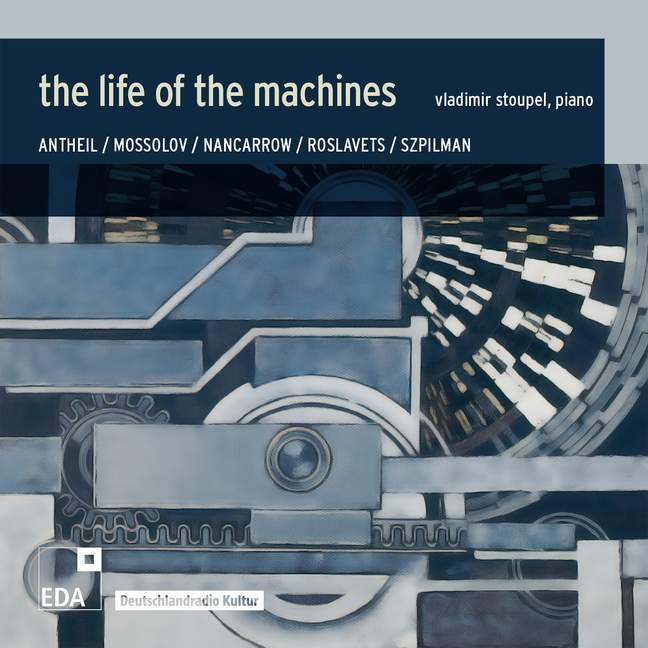
The Life of the Machines, a piano recital recorded by Russian born French pianist Vladimir Stoupel, is an interesting album I recently stumbled across on Freegal Music, the streaming music service offered by some public libraries in the U.S. 

There are good performances of two substantial pieces by composers this blog is concerned about: The second piano sonata of Nikolai Roslavets, and the fourth piano sonata of Alexander Mosolov

The other pieces -- by Conlon Nancarrow, Wladyslaw Szpilman and George Antheil -- put the two Russian pieces an an international context of Futurism. All are interesting; I particularly liked Antheil's fourth piano sonata, which convinces me I need to listen to Antheil more often. 


Saturday, April 2, 2022

An interesting Riccardo Chailly album


Riccardo Chailly is a big name Italian conductor, and he's done the sort of projects you'd expect from an important conductor: A Brahms symphony cycle, the Mahler symphonies, etc.

But he's also demonstrated an ability for interesting programming on his recordings, and I wanted to call attention to his Prokofiev/Mosolov/Varèse album, pictured above, which puts mid-1920s compositions in dialogue, and which also counts as a (mostly) Russian Futurist album.

The album features a good performance of Prokofiev's Third Symphony and also includes Alexander Mosolov's Iron Foundry and Edgard Varèse's Arcana. 

Prokofiev composed his Symphony No. 3 in 1928, Iron Foundry was written in 1926 or 1927 and Arcana was written 1925-1927, so all of the music dates to about the same period. And it's good that Chailly took the occasion to introduce Mosolov to listeners who might only have known about Prokofiev and  Varèse.

Other good Chailly albums include two Shostakovich recordings: The Jazz Album and The Film Album


Wednesday, March 9, 2022

Sad news from Moscow: Arthur Arnold resigns


Arthur Arnold (Facebook photo)

Arthur Arnold has resigned as the music director of the Moscow Symphony Orchestra. It's the orchestra that recorded an album of previously unavailable Alexander Mosolov music; I did several posts about it, including this piece. 

Here is Mr. Arnold's posting on Facebook announcing his decision:

"It is with the greatest conviction and with an immense sadness that I resign from my position as music director of the Moscow Symphony Orchestra (MSO) in Russia, effective immediately.

"The MSO is not state-supported and has never been since its inception in 1989. Nonetheless, I feel that I cannot collaborate with a country whose president chooses war as a solution to conflict and causes incredible human tragedy.

"The fruitful artistic cooperation, which started with a concert in the Amsterdam Concertgebouw in 2004, will be sorely missed.

"My heart goes out to the people in Ukraine and everyone suffering from this needless war. I am proud to join with the countless people across the world who are raising their voices and taking a stand."

Judging from the comments, most agree with Arnold but a few believe it was the wrong decision, as the orchestra is independent of the Russian state (as Arnold himself says). 

Here is the post, with comments. 

The patron behind the Mosolov album and what were supposed to be other efforts to bring Russian music to life, e.g. the "Mosolov project," is Max Gutbrod. He commented,

"Reminds me of the discussion of Furtwänglers role in Nazi time. My impression was that the real issue with him was that he decorated events for the regime and later on did as if he were not involved. In contrast, already when we did https://www.youtube.com/watch?v=Mza8p_iM2gE... together it was rather non-official, a type of opposition type. More broadly, I would think music can help to oppose, and there are great examples of the same, not least Mrs. Kalesnikava. Be it as it may, I am looking forward to exploring options to further the Mosolov-project with Arthur Arnold."

I hope he can find workable options. 

Thursday, March 3, 2022

Can Daniil Trifonov help Mosolov become better known?

Daniil Trifonov playing at Carnegie Hall in 2017 (Creative Commons photo). 

I have been listening to the extended version of The Silver Age by the pianist Daniil Trifonov. I learned about the album via Tyler Cowen, who noted that it has been one of the best reviewed albums of 2021.  It's available on Hoopla Digital, which is offered by most public libraries in the U.S. 

While the new album has music by Stravinsky, Prokofiev and Scriabin, there is the intriguing possibility that Trifonov might consider recording music by Alexander Mosolov. An article from the Chicago Symphony Orchestra's website says:

"Trifonov is also learning a concerto by little-known Russian composer Alexander Mosolov (1900-1973), who served in World War I and received a medical discharge because of post-traumatic stress disorder. He graduated from the Moscow Conservatory in 1925, but ran afoul of Soviet authorities in the 1930s, getting a prison sentence shortened only through the intervention of some prominent fellow composers. Trifonov calls the composer’s virtually unknown concerto a 'bit of a curiosity': 'It’s quite an original work, and it’s almost never played.' ”

While it's certainly already possible to listen to recordings of Mosolov's first piano concerto -- I own two of them, one featuring pianist Rusudan Khuntsaria, the other with Steffen Schleiermacher as the soloist -- a recording by someone as well known as Trifonov would be helpful in providing attention to Mosolov. 


Tuesday, December 15, 2020

More rare Mosolov will be recorded for release


Maestro Arthur Arnold and the Moscow Symphony Orchestra. See the orchestra's website.

The two premiere recordings of the two pieces by Alexander Mosolov on the new Naxos recording of his Symphony No. 5  and his Concerto for Harp and Orchestra are only the beginning of a new effort to make more of his music available. There are also plans to release a recording of his 3rd and 4th symphonies. That's the interesting bits of news in a press release from Naxos issued earlier. Max Gutbrod, the executive producer the new album, says some of Mosolov's chamber and choir music also is being considered.

The press release, which Mr. Gutbrod passed on to me, has quite a bit of information I did not have when I did my previous blog posts on the album (you can read my review and also read my interview with harpist Taylor Ann Fleshman). Here is the release. -- Tom 

Moscow Symphony Orchestra releases world premiere recording Dec. 4 CD is the first to include Alexander Mosolov’s 5th Symphony & Harp Concerto 

FOR IMMEDIATE RELEASE 

December 4, 2020 

Today, the Moscow Symphony Orchestra (MSO) makes history with the release of a world premiere recording of rare works by Russian composer Alexander Mosolov. Now available on the Naxos label, the CD features Mosolov’s Symphony No. 5, as well as his “lost” Concerto for Harp and Orchestra

Though no longer a household name, Mosolov (1900–1973) was once dubbed the “experimental head” of Soviet avant garde music. His 1927 work, Iron Foundry, remains his best  known composition in the western world. But to be experimental and boundary-pushing did not come without consequences, and by 1937 Mosolov had been expelled from the Union of Composers and arrested on accusations of anti Soviet propaganda. He was granted early release in 1938. After the experience Mosolov altered his style significantly. Most of his post-Gulag works took influence from Central Asian folk music rather than Soviet politics, and were performed only once or twice, if at all. 

Mosolov’s Concerto for Harp and Orchestra had its premiere in December 1939 at the Great Hall of the Moscow Conservatory. By all accounts it should have become one of his signature works, but after an initial performance featuring famed Russian harpist Vera Dulova and maestro Aleksandr Gauk, it was soon forgotten. Only the cadenza lived on, and to this is day studied in the harp class of the Moscow Conservatory. Mosolov’s 5thSymphony, his last, was completed in 1965. It met a similar fate and the work was never even performed in his lifetime. 

Enter entrepreneur and music philanthropist Max Gutbrod. Over the past three years, the retired lawyer, mentor to startups, and avid flute player has supported the restoration and resurgence of these compositions, in collaboration with MSO music director Arthur Arnold. 

“I came across the legendary Russian musicologist Ina Barsova who showed me some manuscripts of Mosolov,” Gutbrod recalls. “I immediately contacted Arnold, whose concerts with the Moscow Symphony Orchestra I have been admiring for years now, to see if we could bring these unperformed works to life. Together with Barsova I went to a play-through of the 5th Symphony that Arnold arranged with the MSO. When the music sounded I realized we had found valuable hidden gems.” 

The MSO’s managing director, Marina Levine, agrees. “As soon as I heard the 5th Symphony I knew that we had something unique in our hands,” she says. “How wonderful that the Moscow Symphony Orchestra is part of this exciting project.” 

The only source for the 5th Symphony is a conductor’s score from now-defunct publisher, Kompositor Moscow and a reprint from Schott. No one knows what happened to the original manuscript. The only source for the harp concerto is the composer’s manuscript that Arnold discovered in the library of the Russian National Museum of Music in Moscow. Orchestra parts were created to get the works ready for performance. 

By the winter of 2018, Arnold and the MSO were preparing for a concert and recording session. “There were clear mistakes in the printed score of the 5th Symphony, but with no manuscript to reference, I could only compare notes with other parts of the score and with the manuscripts of his other symphonies. There are no traditions to fall back on. It’s exciting to discover a never performed work to that depth.” says Arnold. 

The harp concerto offered a particular thrill in this regard. Not only had it never been completely performed (Gauk decided to scrap the third movement Gavotte for the premiere in 1939) but Arnold was able to share the groundbreaking event with a young musician connected to one of his other artistic projects — the Pacific Region International Summer Music Association (PRISMA) Festival & Academy in Powell River, British Columbia, Canada.

American harpist Taylor Ann Fleshman was the winner of PRISMA’s 2018 Concerto Competition. The first prize is the opportunity to perform in the MSO in Russia. The 24-year-old got a whole lot more than she bargained for. 

“For me it was obvious to give Taylor the chance to be the soloist for the harp concerto,” says Arnold. “It’s so important to support young musicians. She’s an excellent harpist, has proven herself at PRISMA and was ready for the big leap. What a great opportunity for her career.” 

Arnold and Gutbrod expect that the album, recorded at the Mosfilm Studios, will result in future performances of Mosolov’s music by other orchestras around the world. An upcoming biopic by filmmaker Matthew Mishory, entitled Mosolov’s Suitcase, is also part of their multi-faceted plan to bring the composer more recognition. 

“What Shostakovich was so afraid of—being deported at night—happened to Mosolov,” says Arnold. “How did the actions of the regime impact his writing? He has a clear change in style after his imprisonment, but why? Natural development, political influence, a combination? We will probably never know. It is clear however that the musical language of Mosolov is his unique own and needs to be heard. I feel privileged to be able to discover and study manuscripts of these never-performed symphonies and it is an honor to premiere and record them, so that Mosolov’s musical voice doesn’t get lost and will be known to a broader public.” 

Arnold recently discovered the manuscripts of Mosolov’s 3rd and 4th symphonies in the Russian State Library and is preparing them for performance with the Moscow Symphony Orchestra and for recording on Naxos “World Premiere Recordings.”

Currently Arnold is working closely together with music publisher Kompozitor St. Petersburg to create an official edition of the Concerto for Harp and Orchestra that will be available for performance in the near future. 

To purchase a copy of the album, visit https://naxos.lnk.to/8574102. 

For bookings, commissions and music rental, contact Latitude 45 Arts Management: latitude45arts.com. 

ALEXANDER MOSOLOV 

Alexander Mosolov was one of the foremost composers of the Russian avant-garde during the 1920s. His music was considered 'a testament to the revolutionary spirit of his time’, but the legacy of his fame from that period now rests solely on his work The Iron Foundry. Soviet-era politics brought persecution and imprisonment, and these two recorded works were both composed after his ‘rehabilitation’. The harp concerto – a piece worthy of a place in the mainstream repertoire – is Mosolov’s ‘response ’to the harp concerto by his teacher Glière, and is heard here in its first complete performance. Coupled with the first recording of his final and colorful 5th Symphony, these are fascinating additions to the corpus of neglected Soviet-era works. 

ARTHUR ARNOLD – MOSCOW SYMPHONY ORCHESTRA 

Dutch-born conductor Arthur Arnold is the Music Director of the Moscow Symphony Orchestra since 2012 and the Artistic Director of the Pacific Region International Summer Music Association (PRISMA) Festival & Academy in Canada. He is a guest conductor for orchestras all over the world. 

The Moscow Symphony Orchestra is one of Russia’s leading orchestras, recognized for its outstanding discography, with its recording of film music by Bernard Herrmann (Marco Polo 8.225168) named among the top ten recordings of 2001 in The Economist. International awards for its recordings include CD of the Month awarded by CD Review, the prestigious Diapason d’Or and the Chairman’s Choice at the Cannes Classical Awards. 

TAYLOR ANN FLESHMAN 

Young harpist Taylor Ann Fleshman has, among numerous awards, been First Prize winner of the 2018 Pacific Region International Summer Music Association’s concerto competition. After performing and recording the Mosolov Concerto for Harp and Orchestra in Moscow for Naxos she was invited to the PRISMA Festival to perform the work as a guest soloist for the North American premiere with the PRISMA Festival Orchestra under the baton of Arthur Arnold.


Wednesday, December 9, 2020

Mosolov concerto harpist: Piece 'shows off the brilliancy of the instrument'


Taylor Ann Fleshman (photo courtesy of the artist) 

I've been listening often to the important new Alexander Mosolov recording that includes two previously unavailable pieces, Mosolov's Symphony No. 5 and the composer's harp concerto. 

The recording demonstrates there's more to Mosolov than his best-known works from the 1920s and 1930s. And listening to the harp concerto made me wonder: What was recording it like for the harpist? What did she think of the work?

The soloist on the concerto is Taylor Ann Fleshman, a young North Carolina native now based in New York as principal harpist for The Orchestra Now. I wondered how a Southern lady wound up recording a Russian concerto in Moscow, and she obliged me by taking my questions: 

Russian Futurism: How did you get involved in the project to record the "lost" Mosolov harp concerto?

Taylor Ann Fleshman: In 2018, I attended the PRISMA Festival in British Columbia, Canada and competed in their concerto competition. If one wins, they can either choose $1,500 or they can play one concert with the Moscow Symphony Orchestra. I ended up winning the concerto competition and chose to play with the MSO, but the prize is to play as a regular orchestra musician, not as a soloist. Months later, I believe it was September, I received a phone call from Arthur [MSO conductor Arthur Arnold] with exciting and unexpected news. They originally planned to do the concert with a trumpet soloist, but it was cancelled, so they decided to go down another route, which was an all Mosolov concert. This included the harp concerto, and I immediately said yes!

Russian Futurism: Do you think the Mosolov concerto deserves to enter the performance repertoire? Are you hoping to get invitations to perform it with various orchestras?

Taylor Ann Fleshman: I believe the Mosolov harp concerto deserves to enter the repertoire. It’s definitely one of the larger and longer harp concertos, totaling about 35 minutes. The work offers a wide range of colors and shows off the brilliancy of the instrument.

I do hope to get invitations to perform this work again! I did get the chance to perform it twice the summer of 2019 in Powell River, Canada. Every time I perform it, I uncover something new or find different ways to phrase melodic lines.  

Russian Futurism: Why did you pick the harp as your instrument? What are your favorite pieces for harp? 

Taylor Ann Fleshman: My parents saw a harpist on TV back in 2003 and thought to themselves “Wow, you don’t see many people who play the harp.” I was seven at this time and had been taking piano lessons for two years already, so they thought that it was maybe time to get me involved in a second instrument. One night, my dad asked me if I wanted to play it, and I responded with “David played the harp in the Bible so why not?” At that age, that was my only connection with the harp. 

Henriette Renié (public domain photo)

I really love the repertoire by Henriette Renié, a French harpist, composer, and teacher who was a pioneer in the harp world. One of my favorite pieces by her is “Ballade Fantastique,” which is based on Edgar Allen Poe’s “The Tell-Tale Heart.” The harp is clichédly associated with the angelic, but in this piece, it is linked with horror. One can hear in the music the actions that are occurring in the short story, such as the narrator’s stalking and hiding of the old man’s body.

Russian Futurism: Piano players usually have to use whatever piano is available locally, while violinists travel with their instruments. What's it like for harpists? How often do you get to use your own instrument when you are on the road?

Taylor Ann Fleshman: Most of time, when in the U.S. I will use my own instrument, especially if I am playing with an orchestra or a gig. There have been times though, like when I’ve performed in Europe, Asia, or even the West Coast, where I’ve rented a harp. It is a lot more convenient and safer to rent an instrument than to fly with it. 

Russian Futurism: Please tell me a little bit about The Orchestra Now and your role in it.

Taylor Ann Fleshman: The Orchestra now is a pre-professional orchestra program that trains the upcoming generation of musicians from across the globe.  We perform concerts across the Hudson Valley as well as in Carnegie Hall, Lincoln Center, and the Met Museum of Art. Not only do we perform concerts, but we also write concert notes, have discussions with patrons during intermissions, and do outreach programs in the community, and we also do coachings with leading musicians in our field along with mock auditions to practice taking orchestral jobs. While we're doing all of this, we're also getting degrees at the Bard college in either a Master of Music or an Advanced Certificate. I am the only harpist (principal harp) with The Orchestra Now and earning my Advanced Certificate at the Bard College.


Friday, December 4, 2020

A fine new Alexander Mosolov album

I'm really excited about the new Alexander Mosolov album issued by Naxos. It has 68 minutes of music that's never been available before, so it would be of interest even if the music wasn't that great. But in fact I like the album and expect to listen to it many times. 

The recordings feature Dutch born conductor Arthur Arnold, the Moscow Symphony Orchestra and harpist Taylor Ann Fleshman. There are two pieces: A harp concerto that dates to 1939, and a Fifth Symphony in E Minor that according to this chronology dates to 1960. The harp concerto is pretty and charming, four movements about 37 minutes; the three-movement symphony apparently was Mosolov's last. I wouldn't call the symphony avant garde, but it is interesting enough to hold my attention; the notes for the album (by Anthony Short) say, "Its colourful, if uncontroversial, scoring makes it an enjoyably fascinating addition to the corpus of neglected Soviet-era symphonies now seeing the light of day for the first time." That seems like a fair judgment to my ears.

Short's notes say about the harp concerto "Three of its movements were first performed in 1939 at the Moscow Conservatoire with Vera Dulova as the soloist, but the manuscript score and parts were subsequently consigned to oblivion before being rediscovered and restored for performance by the conductor Arthur Arnold." Short says the symphony was never performed in Mosolov's lifetime and was not even published until 1991.

I even like the album cover, a detail of Wassily Kandinsky's 1929 artwork Jocular Sounds

Taylor Ann Fleshman

Arthur Arnold

Sunday, November 29, 2020

Movie in the works about Alexander Mosolov

There's a movie in the works about one of my favorite composers, Alexander Mosolov. Only a few weirdos like me even know who Mosolov is, so finding out that there's a movie in the works about him is unexpected and exciting. 

The movie is called Mosolov's Suitcase. The website promoting the film says,  "The life, art, and enduring significance of  Russian avant-garde composer Alexander Mosolov inspire four stories  (fictional, semi-fictional, and documentary) about creation and individualism in the face of state power.  Kirill Emelyanov, nominated  for a Best New Actor César (French Oscar), plays the mercurial Mosolov: musician, bad-boy dandy, and forgotten genius of Soviet music.  A film by Matthew Mishory (Absent, A Portrait of  James Dean)."

I can't find anything on the website about when the movie might come out, but I've signed up for an email list. 

Mishory is apparently a rising young director who pays the bills with TV commercials while he pursues his artistic projects.

An April article in "Palm Springs Life" by Sandy Cohen offers quite a bit of information on the film:

"Mishory has spent years working to bring the composer’s story to the screen, making several trips to Mosolov’s native Russia to explore how he and his music persevered despite Communist expulsion in the 1930s."

The piece also says, "As production on the film continues, Mishory is planning a series of concerts by international musicians to introduce contemporary audiences to Mosolov’s music. The filmmaker and his team hope to arrange intimate concerts around the world, including Palm Springs."

Here's a review from Allmusic.com of an album of Mosolov's music, including "Iron Foundry," a short piece that's probably his best-known work, and his once-lost and rediscovered piano concerto.  Quite a bit of Mosolov's music has been recorded and is available on the various music streaming services. 

I've gone Substack

I'm going to try publishing this blog on Substack; please go here to see new posts and an archive of all of my older posts. I'll h...